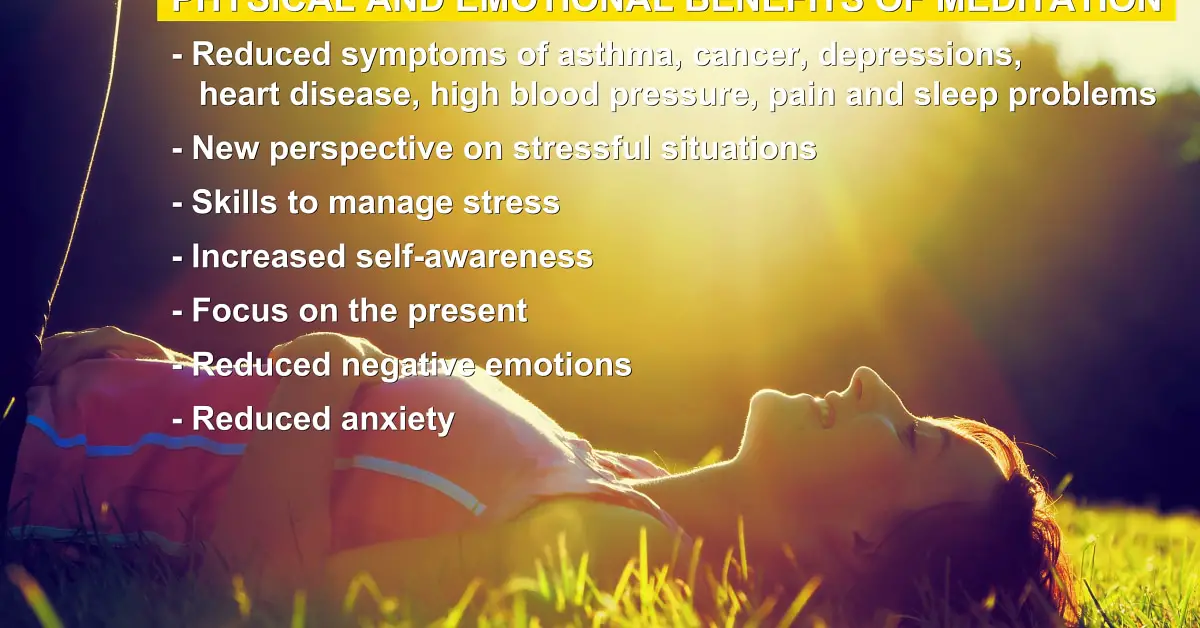
When we relax, blood flow around our body increases and gives us more energy. It helps us have a calmer and clearer mind that supports positive thinking, concentration, memory, and decision making. Relaxation slows our heart rate, lowers our blood pressure and releases tension. Relaxation techniques are a great way to help manage stress.
Relaxation isn’t just about rest or a hobby. Relaxation is a process that reduces the impact of stress on the body and mind. Relaxation techniques can help you deal with everyday stress and stress associated with various health problems, such as heart disease and pain. While relaxation lowers blood pressure, it improves blood circulation.
Studies show that short-term meditation is correlated with an increase in blood flow to the brain. It also improves focus and self-control. The Mayo Clinic recently (October 200) announced that research clearly shows that relaxation must be at the top of everyone’s list of priorities. This not only applies to everyone who is work-a-holics, but also for stay-at-home moms and anyone who wants to stay healthy.
Relaxation reduces mental and body wear and tear, according to the report. For example, you state that relaxation lowers blood pressure and heart rate while increasing blood flow to the main muscle. It also reduces back pain, headaches and muscle tension while improving concentration. The likelihood of emotional reactions such as anger and frustration, but which damage the body, is also reduced.
Taking time to enjoy yourself is also an important element of relaxation. Laughter relieves pain, can support the heart and lungs, promote muscle relaxation, and reduce anxiety. Deep relaxation has many other potential benefits: it can lower blood pressure, reduce pain, and improve your immune and cardiovascular systems. For example, when you imagine relaxing by the sea, think of the smell of salt water, the sound of the waves, and the warmth of the sun on your body.
When your body reaches a state of relaxation, your breathing slows down and your body slows down other functions. Once you know what the stress response feels like, you can make a conscious effort to practice a relaxation technique as soon as you start experiencing stress symptoms. Health professionals such as alternative practitioners, doctors and psychotherapists can teach various relaxation techniques. Relaxation techniques can help you focus on something else, giving your mind a chance to clear up.
Although this is rare, stop what you do if you experience emotional discomfort during relaxation techniques and consider talking to your doctor or mental health provider There are so many health benefits that come with relaxation. So it’s important to know how to relax and find a method that works for you. In general, relaxation techniques involve refocusing your attention on something calming and increasing awareness of your body. But relaxation can be just as beneficial to your health as eating well and exercising, especially if you’ve adopted the tendency of modern society to keep a busy schedule.
Fortunately, it’s easy to learn how to make time to chill out and the best way to relax, no matter how busy you are. Children who are encouraged to engage in more relaxing behaviors tend to be more focused and learn easier than children who are more stressed. If you find that your brain is teeming with information and judgment, you could probably use a relaxation session. For example, you can imagine a calm environment and then focus on controlled, relaxing breathing, slow your heart rate, or feel different physical sensations, such as. B. when you relax each arm or leg individually.
Those who practice self-hypnosis learn to generate the relaxation response when prompted by a phrase or hint
.