
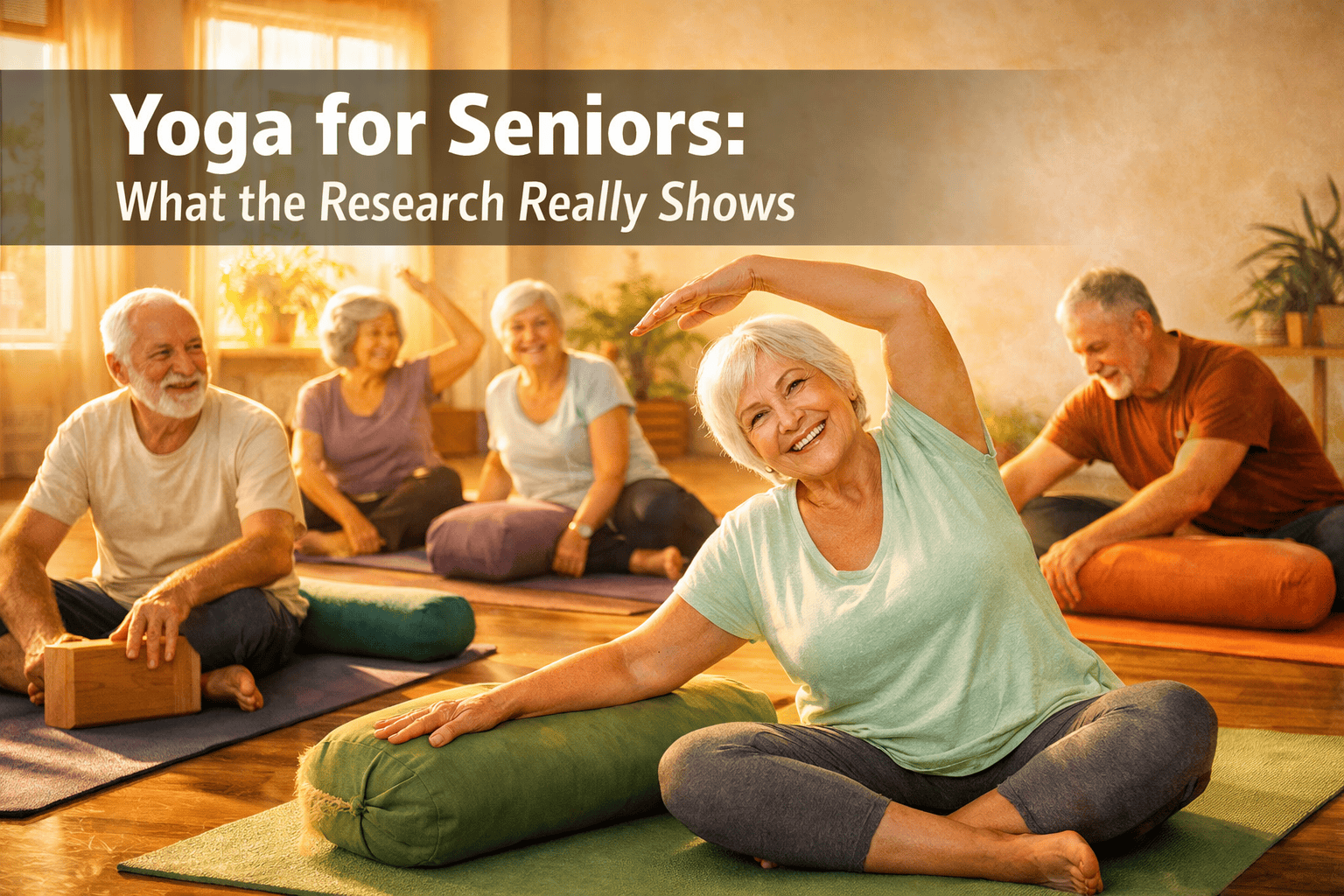
Quick Answer: Yoga for seniors is one of the most well-researched, low-impact activities available to older adults. Studies show it improves balance, strength, mental health, and even biological markers of aging in as little as 9 to 12 weeks. It’s adaptable for nearly every fitness level, including people with limited mobility or chronic conditions.
Key Takeaways
- Yoga for seniors produces measurable improvements in balance, grip strength, and mobility in as little as 9–12 weeks [5]
- A 12-week program reduced anxiety and depression significantly in older adults living in institutional settings [1]
- Participants in yoga groups were 65% less likely to be classified as at risk for frailty compared to non-practitioners [2]
- Grip strength improved by nearly 3 kilograms on average, a key predictor of longevity [2]
- Yoga increases Klotho, an anti-aging protein linked to brain and heart protection [2]
- Chair-based yoga makes the practice accessible to seniors with mobility limitations [3]
- Loneliness scores improved alongside physical fitness, addressing a major public health concern [2]
- Long-term practitioners show greater grey matter volume in memory-related brain regions [4]
- Yoga remains underutilized in geriatric care despite strong evidence supporting its benefits [1]

Boost Balance and Core – Strengthen your core, ankles, and feet with this professional foam balance pad, perfect for yoga, stretching, or daily stability training. Use balance pad board for lunges, planks, squats, and sit-ups to improve coordination and build balance in every workout.
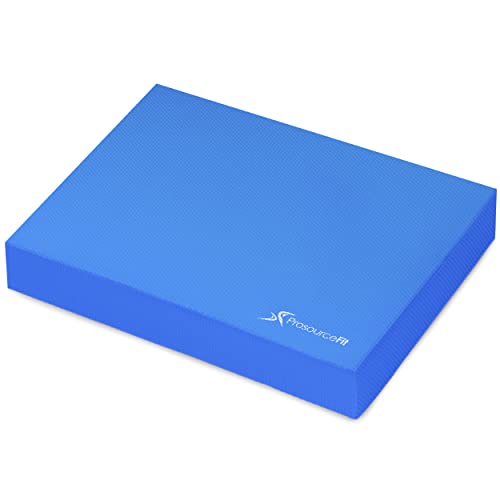
BALANCE & STRENGTH – Foam creates an unstable surface for balance and core exercises

Why Is the Image of Yoga for Seniors Changing?
For decades, yoga was marketed almost exclusively to young, flexible people. The image on magazine covers was clear: a 25-year-old in a pretzel pose. That picture is shifting fast.
In 2026, older adults are one of the fastest-growing groups joining yoga classes, and the research backing them up is substantial. A Harvard-led analysis of nearly 2,400 people aged 65 and older found that yoga practitioners showed meaningful improvements in two critical frailty markers: walking speed and the ability to rise from a chair [3]. These aren’t vanity metrics. They’re the difference between independence and assisted living.
The stereotype of yoga as an activity for the young and bendy doesn’t hold up to scrutiny. What the evidence actually shows is that older adults may benefit more from yoga than younger populations, because the areas yoga targets most directly (balance, joint mobility, mental resilience) are exactly the areas that decline with age.
What Physical Benefits Does Yoga for Seniors Actually Deliver?
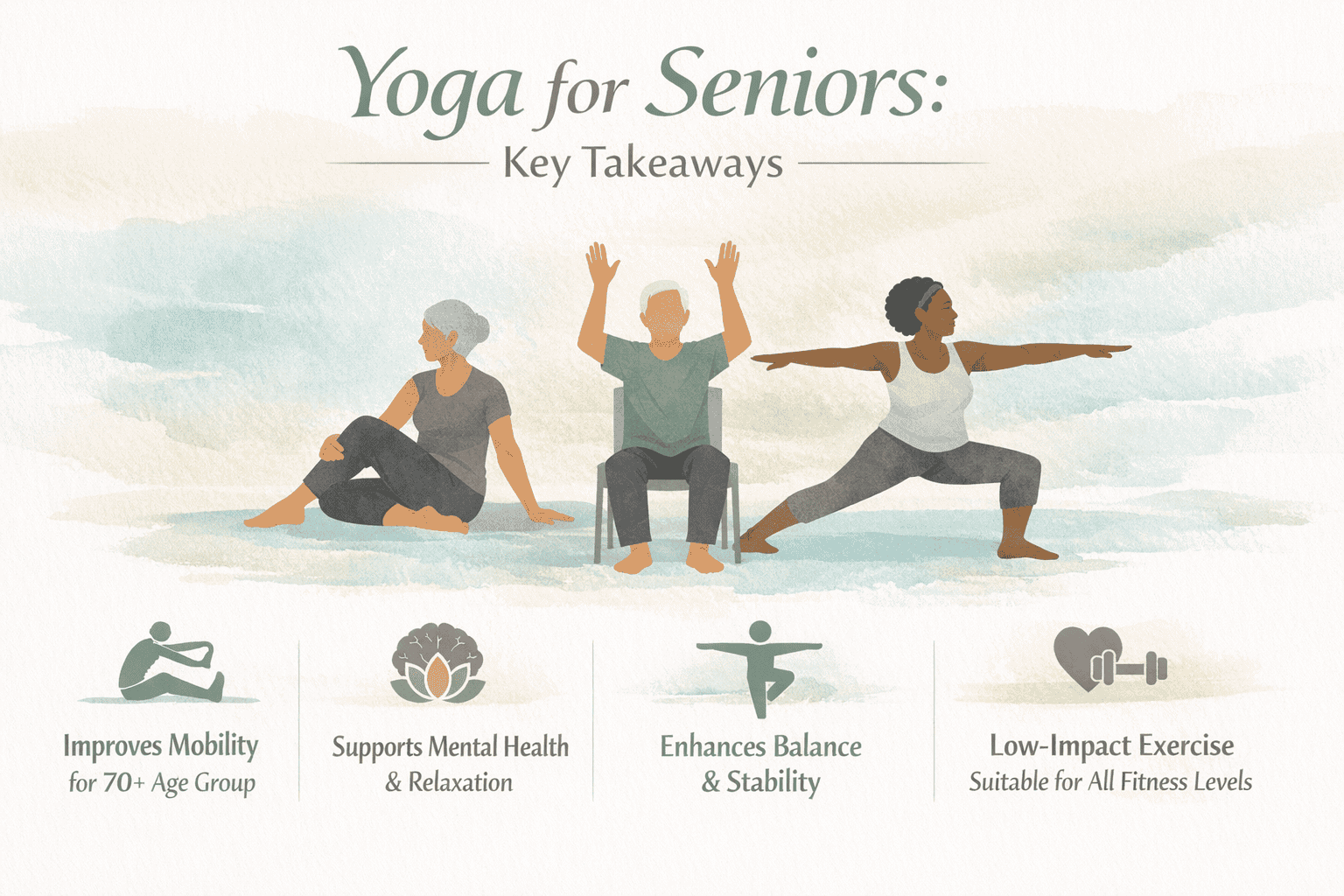
Yoga for seniors produces reliable, clinically meaningful physical improvements within 3 months. The gains aren’t subtle, and they show up across multiple systems in the body.
Balance and Fall Prevention
A targeted yoga program improved balance, strength, and reaction time in women aged 50–70 within just 3 months [6]. Falls are the leading cause of injury-related death in adults over 65, so this matters enormously.
A 12-week yoga intervention also showed statistically significant improvements in balance and functional mobility among older adults in institutional settings [1]. Participants moved more confidently and feared falling less, which itself reduces fall risk (fear of falling often causes the cautious, shuffling gait that paradoxically increases the chance of a fall).
Strength Gains
Grip strength improved by an average of nearly 3 kilograms in yoga practitioners [2]. That number sounds modest, but grip strength is one of the most reliable predictors of longevity in older adults. It’s a proxy for overall muscle health, and improving it at 65 or 75 has real downstream effects on independence.
Frailty Protection
Participants in yoga groups were 65% less likely to be classified as at risk for frailty compared to control groups [2]. Frailty is a clinical syndrome that increases vulnerability to stressors and is associated with poor health outcomes. Reducing frailty risk by that margin with a low-cost, low-impact activity is a remarkable finding.
Anti-Aging Biology
Yoga practitioners also showed increased levels of Klotho, a protein that declines with age and is linked to protection against cognitive decline, heart disease, and metabolic dysfunction [2]. Yoga may be doing something at the cellular level that goes well beyond flexibility.
A 2021 meta-analysis of 12 studies involving 291 participants in their 60s and 70s confirmed significant improvements in strength, balance, mobility, and lower-body flexibility after 9–12 weeks of practice [5].
Choose yoga if: you want a single activity that addresses balance, strength, and mobility simultaneously without high injury risk.
How Does Yoga for Seniors Support Mental Health?
Yoga for seniors significantly reduces anxiety and depression, often more effectively than standard exercise programs. The mental health benefits are as well-documented as the physical ones, and they show up quickly.
In a 12-week study, the yoga group showed significant reductions in anxiety (p = 0.0003) and depression (p = 0.004). The control group, by contrast, showed deterioration in anxiety scores over the same period [1]. That contrast is striking.
“The yoga group showed significant reductions in anxiety and depression, while the control group exhibited deterioration — a finding that highlights yoga’s psychological protective effect in older populations.” [1]
Loneliness: The Overlooked Benefit
Loneliness is a public health crisis among older adults, and it’s rarely addressed by conventional fitness programs. Yoga is different. Research using the validated UCLA Loneliness Scale found significant improvements in loneliness scores among yoga participants [2]. Group classes create community. Breathing exercises and mindfulness components reduce the internal noise that isolation amplifies.
Brain Health
A 2019 study found that long-term yoga practitioners had greater grey matter volume in brain regions associated with memory and emotional regulation — areas that typically shrink with age [4]. Even practitioners with an average of just 6 years of practice showed this effect, suggesting the window for benefit is wide open at any age.
Pairing yoga with relaxing ambient music for meditation and yoga during practice can deepen the calming effects, especially for beginners who find silence uncomfortable.
Is Yoga Safe for Seniors with Limited Mobility?
Yes, with the right modifications. Yoga’s adaptability is one of its greatest strengths for older populations.
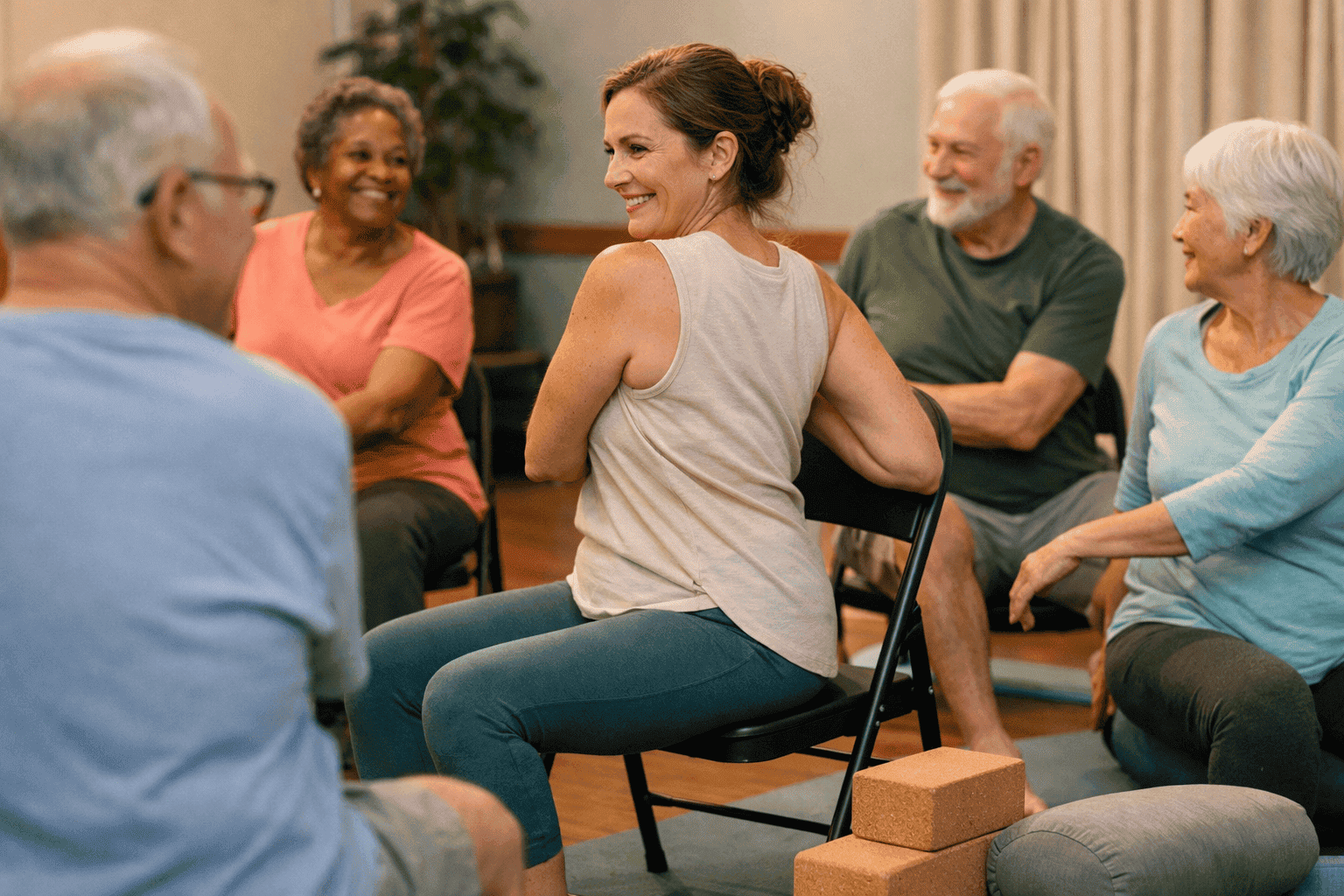
Chair-based yoga has become particularly popular because it removes the floor entirely. Participants perform seated versions of standing poses, making the practice accessible to people with hip replacements, severe arthritis, or balance disorders. The Harvard analysis specifically highlighted chair-based yoga as a key accessibility feature [3].
Essential Props for Safe Practice
Using the right equipment makes yoga safer and more effective for older adults:
- Yoga blocks reduce the distance to the floor and support alignment. See options at best yoga blocks.
- Bolster pillows support the body in restorative poses and reduce joint strain. Find quality options at best yoga bolster pillows.
- Non-slip yoga mats are critical for fall prevention during standing poses. A good yoga mat that elevates your practice and comfort is worth the investment.
Common mistake: Seniors new to yoga often skip props because they feel like “cheating.” Props aren’t a sign of weakness. They’re how yoga stays safe and effective for bodies that have decades of wear on them.
Edge case: Anyone with osteoporosis should avoid deep forward folds and spinal twists without guidance from a qualified yoga therapist or physical therapist. Not all yoga poses are appropriate for all conditions.
How Quickly Can Seniors Expect to See Results?
Most seniors notice meaningful changes within 9 to 12 weeks of consistent practice. This isn’t a slow-burn activity that takes years to pay off.
| Timeframe | What Typically Improves |
|---|---|
| 3–4 weeks | Sleep quality, reduced muscle tension, mood |
| 6–8 weeks | Noticeable balance improvements, reduced joint stiffness |
| 9–12 weeks | Measurable strength gains, reduced fear of falling, improved mobility [5] |
| 6+ months | Brain health markers, reduced frailty risk, loneliness reduction [2] |
Consistency matters more than duration. Two to three sessions per week of 30–45 minutes is enough to produce the results documented in most studies. Daily 10-minute sessions can also help maintain gains between longer practices. A 10-minute meditation practice pairs well with short yoga sessions for a complete mind-body routine.
What Are the Best Types of Yoga for Older Adults?
Gentle, restorative, and chair-based yoga styles are the most appropriate starting points for most seniors. High-intensity styles like Bikram or power yoga carry higher injury risk and aren’t necessary to achieve the documented benefits.
- Hatha yoga: Slow-paced, foundational. Good for beginners.
- Restorative yoga: Uses props extensively. Focused on deep relaxation and recovery.
- Chair yoga: Fully seated or standing with chair support. Best for those with significant mobility limitations.
- Yin yoga: Long-held passive poses targeting connective tissue. Appropriate for most seniors with guidance.
- Yoga therapy: One-on-one or small group, condition-specific. Ideal for post-surgical recovery or chronic disease management.
Choose chair yoga if: you have a hip or knee replacement, use a walker, or have significant balance concerns.
Choose restorative yoga if: you’re managing chronic pain, fatigue, or high stress levels.
Creating a calm, supportive home environment also helps seniors maintain a consistent practice. Ideas from ultimate home relaxation routines can make a home yoga space feel genuinely inviting.
Conclusion: What Seniors (and Their Families) Should Do Next
The research is clear. Yoga for seniors isn’t a niche wellness trend or a gentle hobby for people who can’t do “real” exercise. It’s a clinically supported practice with documented effects on balance, strength, frailty, mental health, loneliness, and even biological aging markers.
Actionable next steps:
- Start with a class, not a video. A qualified instructor can catch unsafe alignment and suggest modifications. Look for instructors with senior yoga or yoga therapy credentials.
- Get the right props. A non-slip mat, two blocks, and a bolster cover most needs for beginner seniors.
- Commit to 9–12 weeks. That’s the minimum window to see measurable physical improvements. Set a calendar reminder and treat it like a medical appointment.
- Talk to a doctor first if: you have osteoporosis, recent surgery, severe balance disorders, or uncontrolled blood pressure. Yoga is adaptable, but some conditions need professional guidance before starting.
- Don’t wait for the “right” flexibility level. Yoga doesn’t require flexibility. It builds it. Starting stiff is normal and expected.
The image of yoga for seniors has changed. It’s no longer a picture of someone who doesn’t need it. It’s a picture of someone who does, and who’s getting real results because of it.
Frequently Asked Questions
Q: Can seniors with arthritis practice yoga? Gentle and chair yoga are generally well-tolerated by people with arthritis. Avoiding high-impact poses and using props to reduce joint stress makes the practice safe. Always consult a doctor or physical therapist for specific joint conditions.
Q: How often should seniors do yoga to see benefits? Two to three sessions per week of 30–45 minutes is enough to produce the improvements documented in clinical studies. Daily shorter sessions also help maintain gains [5].
Q: Is yoga better than walking for seniors? They serve different purposes. Walking builds cardiovascular endurance. Yoga builds balance, flexibility, and mental resilience. Research suggests yoga may be more effective for frailty prevention and fall reduction specifically [3].
Q: What if a senior has never exercised before? Yoga is one of the safest entry points for previously sedentary older adults. Chair yoga in particular requires no prior fitness level and can be started at virtually any age.
Q: Does yoga help with sleep in older adults? Yes. Reduced muscle tension, lower anxiety, and improved stress regulation from yoga practice commonly translate to better sleep quality, though large-scale sleep-specific studies in seniors are still limited.
Q: Can yoga slow cognitive decline? Long-term practitioners show greater grey matter volume in memory-related brain regions compared to non-practitioners [4]. Yoga also increases Klotho, a protein linked to cognitive protection [2]. The evidence is promising but not yet definitive for dementia prevention specifically.
Q: Is online yoga safe for seniors? Online classes can work well for seniors who are already familiar with basic poses. Beginners benefit more from in-person instruction where an instructor can observe and correct alignment safely.
Q: What’s the biggest mistake seniors make when starting yoga? Skipping props and pushing into pain. Props are essential tools, not shortcuts. Pain during a pose is a signal to stop, not push through.
References
[1] PMC Research Study – https://pmc.ncbi.nlm.nih.gov/articles/PMC12922125/
[2] New Study Documents Yoga’s Powerful Anti-Aging Benefits – https://yogauonline.com/yoga-practice-teaching-tips/yoga-teaching/new-study-documents-yogas-powerful-anti-aging-benefits/
[3] Harvard-Led Study: Yoga Fights Frailty – https://www.health.harvard.edu/healthy-aging-and-longevity/harvard-led-study-yoga-fights-frailty
[4] Yoga for Longevity: Yoga Science and Ageing – https://vikasa.com/2025/08/19/yoga-for-longevity-yoga-science-ageing/
[5] Benefits of Yoga for Older Adults – https://www.ideafit.com/benefits-of-yoga-for-older-adults/
[6] Better Balance, Fewer Falls – https://yogatherapy.health/2026/01/29/better-balance-fewer-falls/


