

You’re wondering how to actually do self-improvement, the kind that sticks and makes a real difference. It’s less about magic formulas and more about putting practical steps into action. Think of it as tending a garden for yourself – some things need regular watering, others strategic pruning, and sometimes you just need to clear out the weeds. This isn’t about becoming a perfect, unattainable version of yourself overnight. It’s about making consistent, intentional choices that lead to growth. Let’s break down how you can actually start unlocking your potential, one manageable step at a time.
First things first: when we talk about “potential,” it’s easy to get sidetracked into thinking it means being the absolute top performer in every area. That’s a recipe for burnout and discouragement. Your potential is really about what you could become, given your unique strengths, interests, and circumstances. It’s about moving from where you are now to a more fulfilling, capable version of yourself.
Identifying Your Starting Point
Before you can aim for anywhere, you need to know where you are. This isn’t about judgment, it’s about honest assessment.
What Are You Good At, Really?
Think beyond just your job. What do people come to you for advice on? What tasks do you find yourself naturally good at finishing, even if they’re small? These are clues to your inherent strengths.
Where Do You Feel Stagnant?
Conversely, where do you feel stuck? What areas of your life consistently leave you feeling frustrated or unfulfilled? These are often indicators of where self-improvement could be most impactful. It’s not about fixing flaws, but about addressing areas that are holding you back from greater satisfaction.
Building Foundational Habits: The Bedrock of Growth
Many self-improvement goals falter because they lack a solid base. Habits are the small, repeated actions that, over time, create significant change. They’re the consistent effort that turns intention into reality.

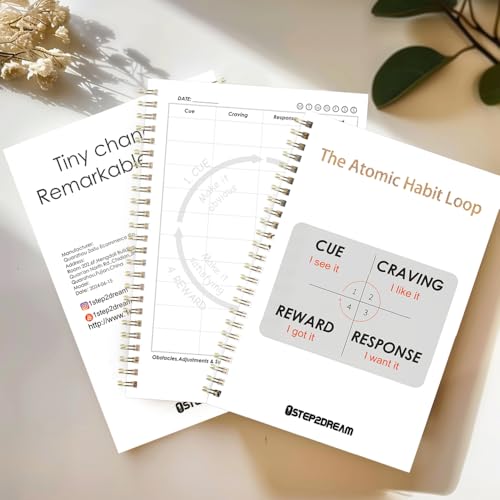
Effective Habit-Building: This planner notebook is inspired by Atomic Habits, designed to help you leverage wisdom to establish good habits.

The Power of Consistency Over Intensity
Trying to overhaul your life in a week is rarely sustainable. Small, consistent actions are far more effective. A 15-minute walk every day is better than a gruelling two-hour gym session once a month.
Habit Stacking: Linking New to Old
One of the most practical ways to build new habits is to attach them to existing ones. If you already brush your teeth every morning, maybe you can do 10 squats immediately after.
- Example: “After I finish my morning coffee, I will spend 5 minutes journaling.”
- Example: “Before I close my laptop for the day, I will plan my top 3 priorities for tomorrow.”
Making Habits Obvious, Attractive, Desirable, and Satisfying
This framework, popularized by James Clear, offers a useful way to approach habit formation:
Obvious: Make It Easy to See and Start
If you want to drink more water, keep a water bottle on your desk. If you want to read more, leave a book out.
Attractive: Make It Something You Want to Do
Pairing a less desirable habit with something you enjoy can help. Listening to a favorite podcast while you exercise, for example.
Desirable: Increase Your Motivation
Focus on the why. Why do you want this habit? Remind yourself of the benefits.
Satisfying: Make It Rewarding
Celebrate small wins. Acknowledge when you’ve successfully completed your habit for the day or week.
Developing a Growth Mindset: Shifting Your Perspective

Your mindset – the way you think about your abilities and intelligence – has a huge impact on your ability to improve. A fixed mindset sees your abilities as set in stone, while a growth mindset believes they can be developed through dedication and hard work.
Embracing Challenges as Opportunities
Instead of avoiding things that are difficult, view them as chances to learn and grow. Every mistake is a potential lesson.
Learning from Setbacks
Failure isn’t the end of the road; it’s a detour. Analyze what went wrong, extract the lessons, and adjust your approach.
- Instead of: “I’m just not good at public speaking.”
- Try: “That presentation didn’t go as well as I’d hoped. What specific parts can I improve for next time? Maybe I need to practice my delivery more or work on my visual aids.”
The Power of “Yet”
Adding the word “yet” to statements about your perceived limitations can be incredibly powerful.
- Instead of: “I don’t understand this concept.”
- Try: “I don’t understand this concept yet.” This subtly shifts the focus from a permanent state to a temporary one, implying that understanding is achievable.
Sharpening Your Learning Skills: Becoming a Lifelong Learner

The world is constantly changing, and the ability to learn new things and adapt is crucial for long-term growth. This isn’t just about formal education; it’s about cultivating a curious and inquisitive approach to life.
Actively Seeking New Knowledge and Skills
Don’t wait for information to come to you. Be proactive in your learning.
Diversify Your Learning Sources
Books are great, but so are podcasts, documentaries, online courses, workshops, and even conversations with knowledgeable people.
- Reading: Pick up a book on a topic outside your usual comfort zone. It could be history, science, a new craft, or even fiction that explores different perspectives.
- Listening: Subscribe to podcasts that discuss subjects you’re interested in, or ones that challenge your current understanding.
- Watching: Explore educational YouTube channels or documentaries that offer deep dives into various fields.
The Importance of Practice and Application
Learning isn’t just about consuming information; it’s about putting it into practice.
Transferring Knowledge to Action
Once you learn something new, find a way to apply it. If you learn a new cooking technique, try it out in your kitchen. If you learn a productivity hack, implement it in your workday.
- Example: If you’re learning a new language, actively try to use new words and phrases in your daily conversations, even if it’s just with yourself.
Cultivating Self-Awareness: Knowing Your Inner Landscape
| Category | Metric | Progress |
|---|---|---|
| Physical Health | Exercise | 3 times per week |
| Emotional Well-being | Meditation | 10 minutes daily |
| Learning | Books Read | 2 per month |
| Productivity | Time Management | Using a planner |
Understanding yourself – your thoughts, emotions, motivations, and triggers – is fundamental to effective self-improvement. Without this awareness, you’re essentially trying to navigate without a map.
Mindfulness and Reflection Practices
These practices help you pause and observe your inner world without immediate judgment.
Journaling: A Mirror to Your Mind
Regularly writing down your thoughts and feelings can reveal patterns, uncover biases, and help you process experiences. Don’t worry about perfect prose; just let it flow.
- Prompts: What brought you joy today? What challenged you? What emotions did you feel and why? What did you learn about yourself?
Body Scan Meditations
These guided practices help you connect with your physical sensations, which can be indicators of underlying emotions or stress. Even a few minutes daily can build awareness.
Recognizing and Managing Your Emotions
Understanding your emotional responses is key to responding rather than reacting.
Identifying Emotional Triggers
What situations, people, or thoughts consistently lead to strong emotions (positive or negative)? Awareness is the first step to managing them.
- Example: Noticing that you feel overly critical of yourself after social media scrolling. This awareness allows you to set limits on your usage or consciously counteract the negative self-talk.
Developing Healthy Coping Mechanisms
When you feel overwhelmed or triggered, what can you do that’s constructive? This could be deep breathing, going for a walk, talking to a friend, or engaging in a hobby.
Setting Realistic Goals: The Art of Achievable Ambition
Vague aspirations lead to vague results. Setting well-defined, achievable goals is essential for making tangible progress and maintaining motivation.
The SMART Framework for Goal Setting
This is a practical, proven method for creating effective goals.
Specific: Clearly Define Your Objective
What exactly do you want to achieve? Vague goals like “get healthier” are hard to track.
- Instead of: “Get healthier.”
- Try: “Walk for 30 minutes, 5 days a week.”
Measurable: Quantify Your Progress
How will you know when you’ve reached your goal? You need clear metrics.
- Example: “Read one book per month” is measurable. “Become a better reader” is not.
Achievable: Ensure It’s Within Your Reach
While challenging goals are good, they should also be realistic given your current resources and circumstances.
- Consider: “Can I realistically commit to this, or is it too much too soon?”
Relevant: Align With Your Values and Other Goals
Does this goal matter to you? Does it contribute to your broader life objectives?
- Example: If your long-term goal is to build a career in a specific field, a relevant goal might be to complete a relevant online course.
Time-Bound: Set a Deadline
Having a timeline creates a sense of urgency and helps with planning.
- Example: “I will complete the introduction chapter of my novel by the end of next month.”
Breaking Down Large Goals
Big goals can feel overwhelming. The trick is to chop them into smaller, manageable steps.
Creating Actionable Steps
For any significant goal, outline the individual actions required to achieve it.
- Goal: Run a 5k race.
- Step 1: Research local 5k races and pick one.
- Step 2: Find a beginner’s running plan.
- Step 3: Schedule my first training run for X day.
- Step 4: Purchase appropriate running shoes.
This detailed approach makes the daunting seem doable, one step at a time. It’s about consistent effort, not a sudden transformation. By focusing on these practical strategies, you can genuinely start to unlock your potential and build a more fulfilling life.